Create an Interesting Backdrop
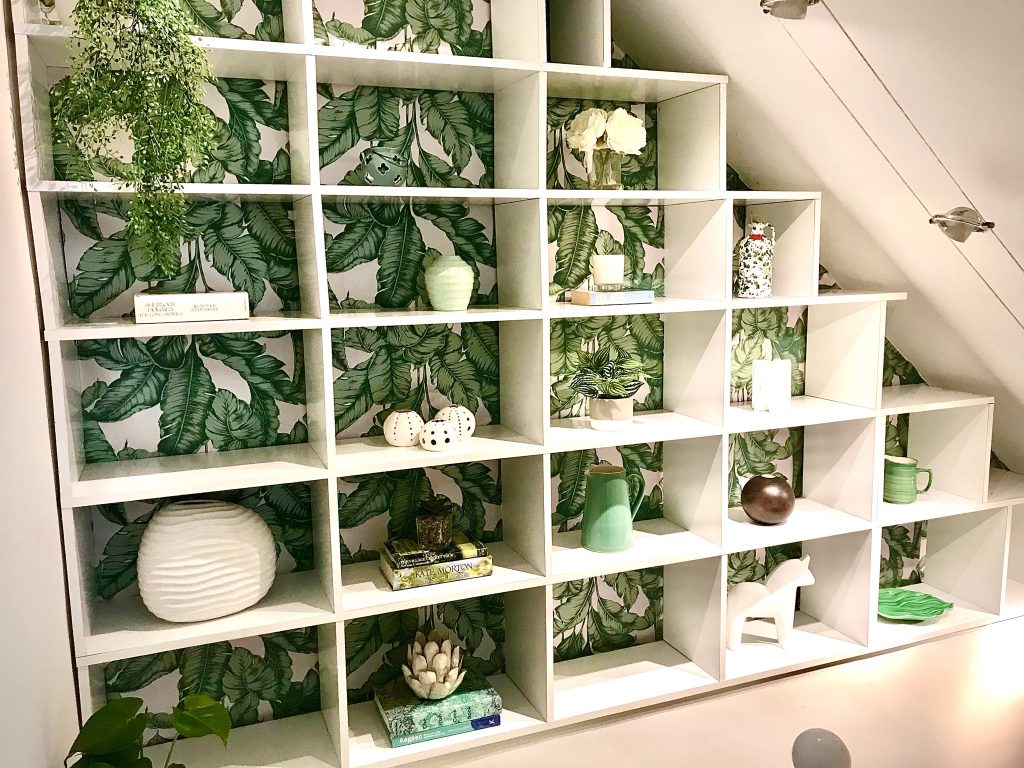
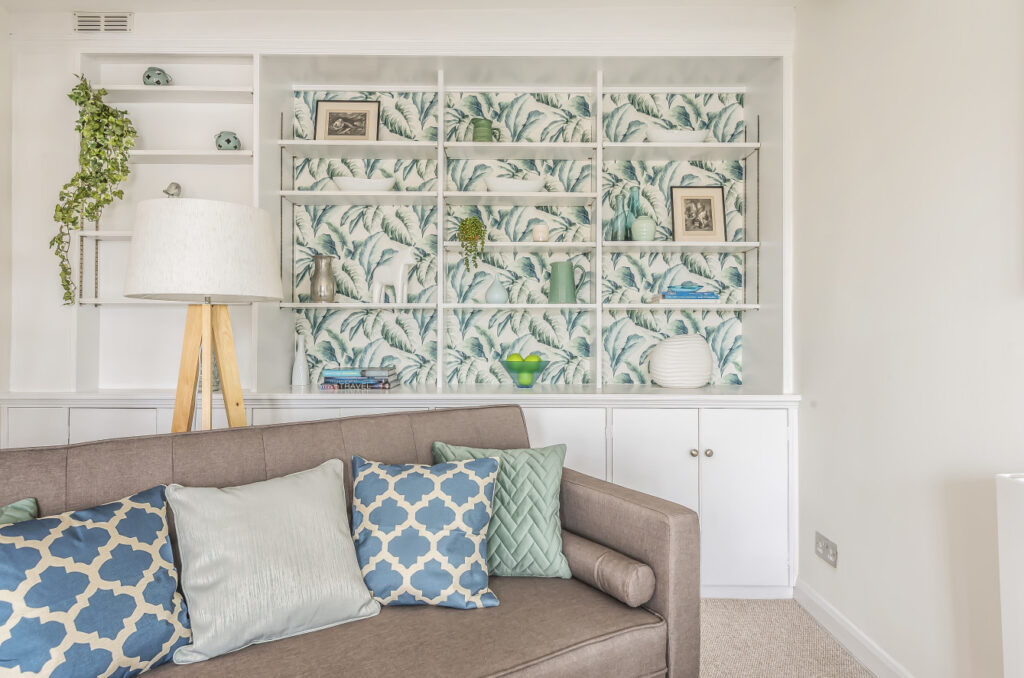
I feel most inspired when styling shelves, they offer a chance to tell a visual story. You can layer objects, textures, and colour with intention. I often treat the back of shelves as a design feature instead of leaving them plain I add wallpaper. This simple step adds impact and personality. It also makes shelving feel bespoke and considered. I often choose patterned or textured wallpapers, sometimes bold and graphic, other times soft and atmospheric. Recently, I’ve favoured biophilic designs. These bring a sense of the outdoors inside with leafy prints and botanical patterns adding calm and depth. They work beautifully behind styled shelves.
Incorporate Plants
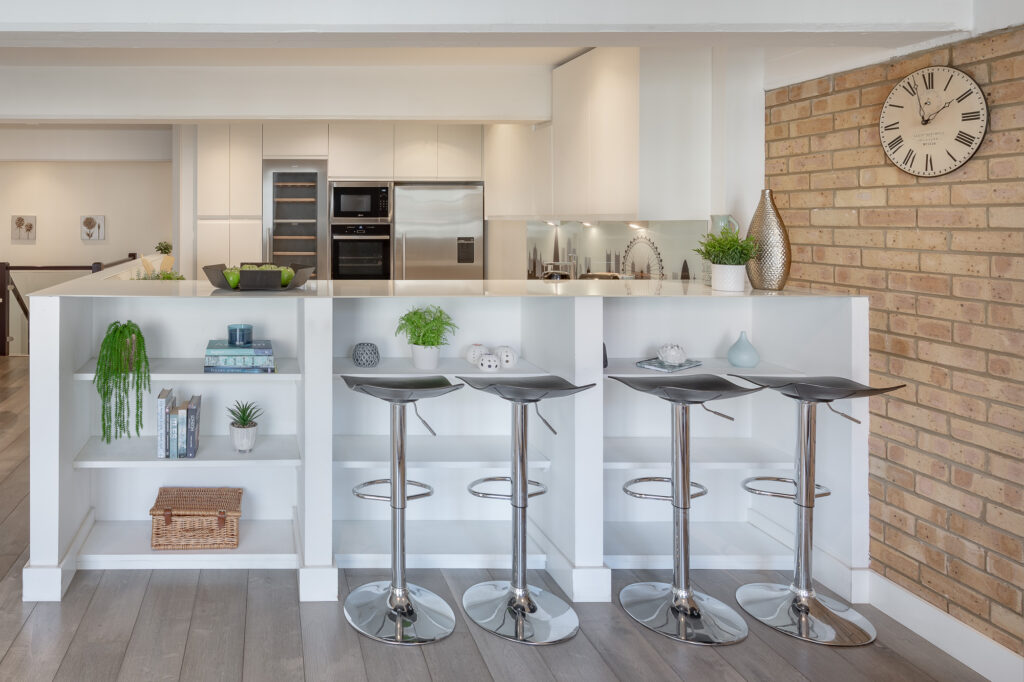
No shelf feels complete without greenery, plants add life, movement, and softness. They balance structured shelving with a natural touch. Trailing plants work especially well as they cascade down shelves and soften hard lines. This creates a relaxed and effortless look. Smaller plants add height and texture variation and I use succulents, potted plants, or dried botanicals too. Place them thoughtfully within the arrangement. Balance them with books and decorative objects.
Complement Your Design Scheme
Shelf styling should connect to the wider room it should never feel separate or disconnected. I use a consistent colour palette throughout. and repeat tones from walls, furniture, and textiles. This creates a cohesive and balanced look.
Exact matches are not necessary though focus on a consistent thread across the space. For example, echo warm neutrals or soft greens. You can introduce subtle variations. Try deeper shades or softer tones within the palette. This adds interest without disrupting harmony.
Group Objects and Vary Heights
Group objects in odd numbers, arrangements of three or five feel more natural. Odd groupings create rhythm and movement. They guide the eye across the display. I do sometimes break this rule though if it feels right! Even groupings can feel too static. Vary the height of objects in each group. Mix tall, medium, and low pieces together. This builds depth and visual interest. For example, pair a tall vase with books and a small object. This creates a natural visual triangle. Think of each group as a small composition. Together, they form a cohesive display. The result feels balanced, relaxed, and dynamic.